




ICS-CAAS Sets a New Benchmark for China–Africa Cooperation in Crop Science and Technology
From October 26 to 28, 2025, the 2025 General Assembly of the China–Africa Agricultural Science and Technology Innovation Alliance (CAASTIA) was held in Addis Ababa, Ethiopia, under the theme “Jointly Building the China–Africa Agricultural Science and Technology Innovation Alliance, Jointly Promoting Modern Agricultural Development in China and Africa.” As a core component of the Assembly, Side Event I—“Crop Science and Technology Cooperation for Enhancing China–Africa Food Security”—was co-organized by ICS-CAAS together with the Institute of Vegetables and Flowers, the China National Rice Research Institute, and the Oil Crops Research Institute of CAAS, marking a new phase of platform-based, systematic, and results-oriented cooperation between China and Africa in crop science and technology.
Key Conference Breakthroughs: Focusing on Project Implementation and Inaugurating Joint Laboratories
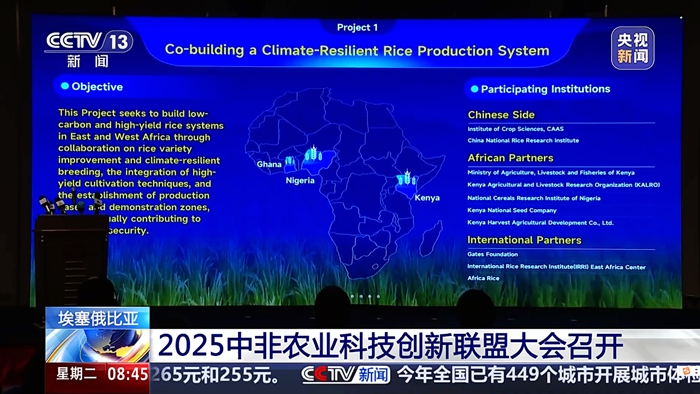
Co-hosted by the Chinese Academy of Agricultural Sciences (CAAS), the African Academy of Sciences (AAS), and the Permanent Mission of China to the African Union, the Assembly released the “Three-Year Action Plan for CAASTIA,” which set out an implementation pathway for future agricultural S&T cooperation. The Assembly also launched the first six cooperative projects under CAASTIA, two of which are led by ICS-CAAS: “Co-building Climate-Resilient Rice Production Systems” and “R&D and Promotion of Comprehensive Technologies for Maize Yield Increase and Efficiency Enhancement.”
The “Co-building Climate-Resilient Rice Production Systems” project focuses on rice variety improvement, climate-resilient breeding, and the integration of high-yield cultivation technologies in Eastern and Western Africa, with the aim of facilitating low-carbon, high-yield rice systems on the continent. The “R&D and Promotion of Comprehensive Technologies for Maize Yield Increase and Efficiency Enhancement” project targets the promotion of key technologies—including dense planting with high-yield precision regulation, efficient water and nutrient management, and green pest control—so as to reduce maize production costs, increase yields per unit area, and establish a sustainable technology extension system in Africa.
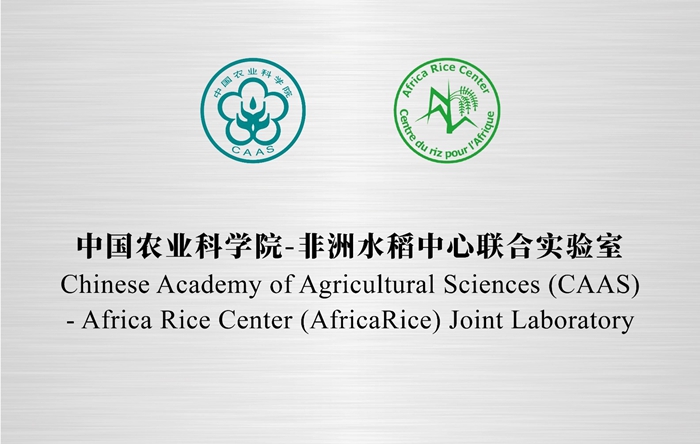
During the Assembly, four international joint laboratories were inaugurated. Among them, the CAAS–Africa Rice Center (AfricaRice) Joint Laboratory, led by ICS-CAAS, was officially unveiled by Wang Wensheng, Deputy Director General of ICS-CAAS, and Dr. Samuel Bruce Oliver, Senior Advisor to the Director General of AfricaRice. The joint laboratory aims to deepen China–Africa scientific cooperation in rice, focusing on germplasm evaluation, breeding technology innovation, and new variety development, as well as the development of supporting cultivation technologies. It will also facilitate joint training and academic exchanges, leveraging the strengths of both sides to contribute to food security and sustainable agricultural development.
In-depth Side Event: Focusing on Crop Science and Technology, Consolidating Consensus
The side event “Crop Science and Technology Cooperation for Enhancing China–Africa Food Security,” chaired by Wang Wensheng, Deputy Director General of ICS-CAAS, brought together more than 60 scientific and technical experts from China, Ethiopia, Kenya, and Nigeria. It was attended and guided by Sun Tan, Vice President of CAAS, and Qian Yu, Deputy Director-General of the Department of International Cooperation, CAAS. Eight experts from China and abroad delivered presentations on key crops such as rice, soybean, peanut, potato, and sesame, sharing recent advances in R&D, the effectiveness of applied results, and practical pathways for international cooperation.
During the exchange session, participants reached broad consensus around three themes: “Climate Response: Priority R&D Areas for Crop Application Technologies,” “Industrial Implementation: Pathways for Empowering the Industrialization of Crop Science and Technology,” and “Deepening Synergy: Models for China–Africa Agricultural S&T Cooperation in the New Era.” Participants agreed that food security is a shared strategic priority for China and Africa; that African agriculture holds significant potential; and that China has mature practical experience in crop breeding and technology transfer. Facing the dual challenges of climate change and food security, the two sides should further deepen cooperation, explore efficient and sustainable collaboration pathways, and contribute to global food security governance.
The successful convening of the Assembly and the side event highlights the role of ICS-CAAS in advancing China–Africa agricultural S&T cooperation. Going forward, ICS-CAAS will build on this momentum and continue to deepen cooperation with African partners, with a focus on climate-resilient crop breeding, high-yield and high-efficiency cultivation technologies, and the development of industry-oriented technology extension systems, so as to elevate China–Africa cooperation in crop science and technology to deeper, broader, and higher levels.